
Ní Luasa, Siobhán (2026) 2025 alcohol treatment demand. Drugnet Ireland, Issue 96, October 2026, pp. 31-36.
| Preview | Title | Contact |
|---|---|---|
|
PDF (Drugnet Ireland 96)
2MB |
Published in June 2026, the latest National Drug Treatment Reporting System (NDTRS) report on alcohol treatment demand in Ireland presents data on alcohol treatment cases for 2025 and examines trends over the period 2017–2025. It outlines key findings on the profile of cases treated, including levels of problem alcohol use, alcohol consumption patterns, types of alcohol consumed, sociodemographic characteristics, and region of residence. The report also analyses polydrug use in 2025 and trends across 2017–2025, with a particular focus on the use of cocaine alongside alcohol, the most reported co-used substance.
The full report, along with accompanying data tables, are available to download from the HRB website.1
When interpreting the data, it is important to consider both percentages and absolute numbers. These may move in different directions over time; percentages can appear stable despite substantial changes in the underlying case counts, or vice versa. For this reason, trends should be assessed using both measures.
Main findings
In 2025, a total of 8,798 cases were treated for problem alcohol use, representing a slight increase compared with 2024 (8,745 cases).
More than 4 in 10 cases (43.1%) had not previously received treatment.
Most cases were treated in outpatient settings (63.3%), followed by residential services (29.4%), low-threshold services (6.4%), and prison settings (0.9%).
Profile of cases treated
Level of problem alcohol use
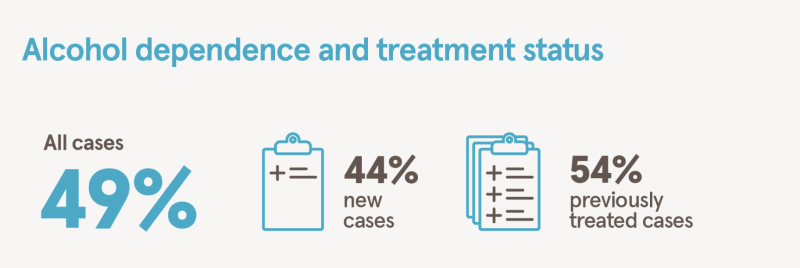
Almost one-half of all cases (48.7%) were classified as alcohol dependent by the treating healthcare professional. Dependence was more common among previously treated cases (54.3%) than among new cases (43.5%).
Smaller proportions of all cases were classified as harmful drinkers (29.8%) and hazardous drinkers (15.7%).
Alcohol consumption patterns
In 2025, the median age at which cases first started drinking alcohol was 15 years, one year younger than in 2024.
A total of 7 in 10 cases (70.5%) had consumed alcohol in the 30 days prior to starting treatment, and of these, more than one-half (57.7%) reported daily use.
Cases reported that in the 30 days prior to treatment, on a typical drinking day:
- The median number of standard drinks consumed was 14 (range: 5–32).
- Previously treated cases reported a higher median consumption of 15 standard drinks (range: 5–35), compared with 12 (range: 5–30) among new cases.
- Females reported a median of 12 standard drinks per typical drinking day, while males reported a median of 15.
These levels exceed low-risk drinking guidelines, which recommend up to 11 standard drinks per week for females and up to 17 per week for males.
Type of alcohol consumed
Almost two in three cases (62.5%) reported having a single preferred alcohol type, while 34.5% reported having more than one. The most preferred types of alcohol were spirits (57.6%), followed by beer (45.5%) and wine (29.5%). Among those with multiple preferences, the most common combinations were beer and spirits; spirits and wine; and beer, spirits, and wine.
Sociodemographic characteristics
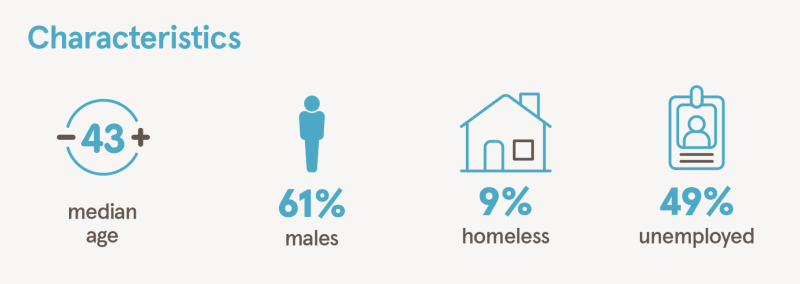
- Males accounted for the majority of alcohol treatment cases (60.5%).
- Homelessness was recorded in 8.8% of cases, with a higher prevalence among males (10.9%) compared with females (5.6%).
- Irish Travellers represented 1.5% of all cases.
- Almost one-half of cases (49.4%) were unemployed, while 34.1% were in paid employment.
- The median age of cases was 43 years, with females slightly older (median 44 years) than males (median 42 years).
- Among cases with children aged 17 years and under, almost one-half (48.8%) had at least one child living with them at the time of treatment entry; this was more common among females (65.0%) than males (37.1%).
HSE health regions
In 2025, the HSE Dublin and North East Health Region recorded the highest number of cases (2,297) treated for alcohol as a main problem.
Polydrug use
The proportion of cases treated for problem alcohol use involving polydrug use (the use of alcohol alongside other substances) increased from 19.8% in 2017 to 32.1% in 2025.
In 2025, the most commonly reported additional drugs were:
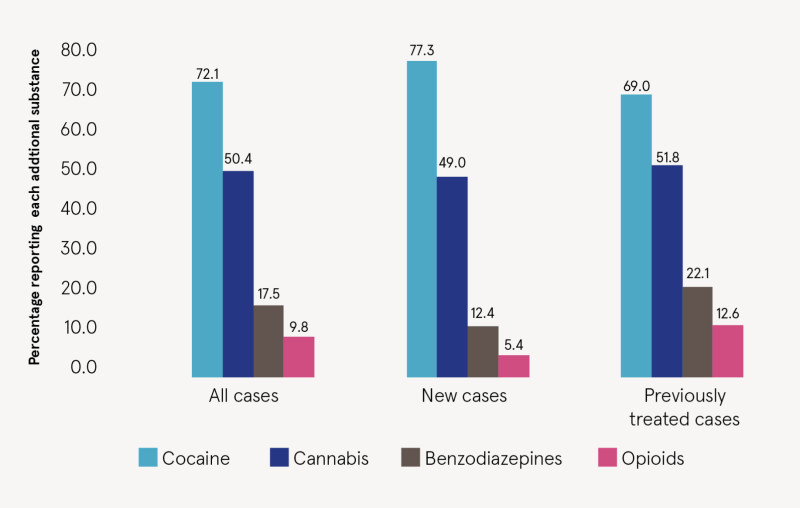
- cocaine (72.1%)
- cannabis (50.4%)
- benzodiazepines (17.5%)
- opioids (9.8%).
This pattern was observed among both new and previously treated cases, although percentages varied by treatment status. As shown in Figure 2, 77.3% of new cases reported using cocaine alongside alcohol, compared with 69.0% of previously treated cases. Similarly, cannabis was the second most commonly reported additional drug in both groups.
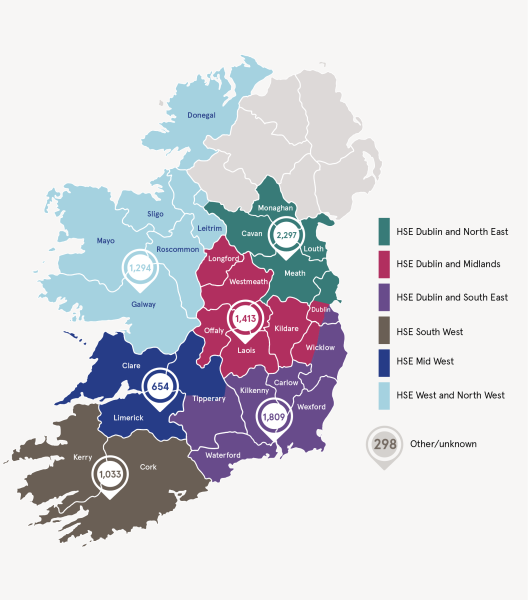
Figure 1. Number of cases treated for problem alcohol use by Health Region of residence, NDTRS, 2025
Source: NDTRS (2025)
Figure 2: Additional problem substances reported and treatment status
Age groups
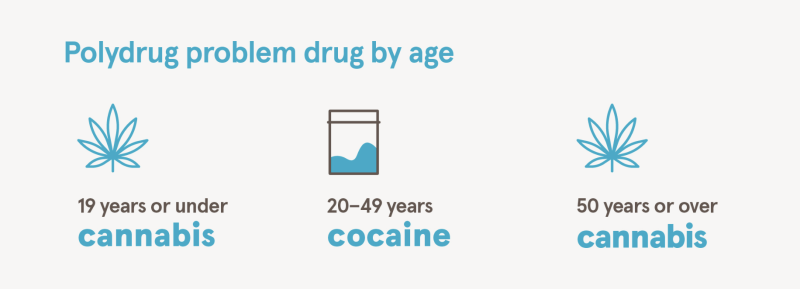
Clear differences emerge across age groups in the types of additional drugs used alongside alcohol:
- Cannabis was the most commonly reported additional drug among those aged 19 years or under.
- Cocaine was the most common among those aged 20–49 years.
- Cannabis was also the most common among those aged 50 years or over.
Trends in cocaine use with alcohol
Cocaine was the most frequently used drug in conjunction with alcohol; in 2025, 72.1% of cases involving an additional drug reported problem cocaine use. The median age of cases treated for cocaine use alongside alcohol increased from 32 years in 2017 to 35 years in 2025.
In new cases reporting polydrug use, the proportion reporting cocaine use increased from 44.0% in 2017 to 77.3% in 2025; the case numbers involving cocaine increased more than threefold from 2017 to 2025.
Source: NDTRS (2017–2025)
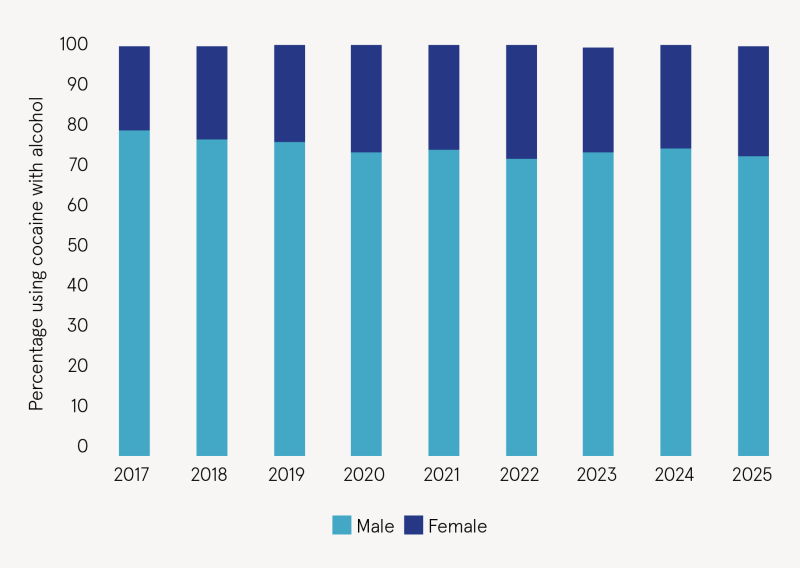
Figure 3: Proportion using a combination of alcohol and cocaine by gender
For previously treated cases, cocaine use increased from 39.8% to 69.0% of polydrug cases over the same period; the case numbers involving cocaine among those returning to treatment increased more than 3.5 times from 2017 to 2025.
By sex, cases reporting cocaine use in combination with alcohol increased by 198.9% in males and by a larger proportion (322.8%) in females (see Figure 3).
1 Ní Luasa S, Lynch T, O’Sullivan M and Carew AM (2026) National Drug Treatment Reporting System, 2025 Alcohol Treatment Demand. HRB StatLink Series 32. Dublin: Health Research Board. Available from:
https://www.drugsandalcohol.ie/45688/
B Substances > Alcohol
B Substances > Cocaine
B Substances > Opioids (opiates)
B Substances > New (novel) psychoactive substances > Benzodiazepines
G Health and disease > Substance use disorder (addiction) > Multiple / concurrent substance use (Poly-drug)
G Health and disease > Substance use disorder (addiction) > Alcohol use disorder
J Health care, prevention, harm reduction and treatment > Risk and protective factors > Risk factors
J Health care, prevention, harm reduction and treatment > Treatment and maintenance > Treatment factors
T Demographic characteristics > Gender / sex differences
VA Geographic area > Europe > Ireland
VA Geographic area > Europe > Ireland > County / regional data
Repository Staff Only: item control page