
Robinson, Janet and Lyons, Suzi  ORCID: https://orcid.org/0000-0002-4635-6673
(2026)
Launch of the first data report from the National DRIVE Project.
Drugnet Ireland,
Issue 95, July 2026,
pp. 1-5.
ORCID: https://orcid.org/0000-0002-4635-6673
(2026)
Launch of the first data report from the National DRIVE Project.
Drugnet Ireland,
Issue 95, July 2026,
pp. 1-5.
| Preview | Title | Contact |
|---|---|---|
|
PDF (Drugnet Ireland 95)
3MB |
On 8 May 2026, Jennifer Murnane O’Connor, Minister of State at the Department of Health with special responsibility for Public Health, Wellbeing and the National Drugs Strategy, launched the first data report for the DRIVE (Drug-related intimidation and violence engagement) Project.1 The launch event was chaired by Antoinette Kinsella, Chairperson, National DRIVE Oversight Committee. Speakers included Assistant Commissioner Angela Willis, Organised and Serious Crime, An Garda Síochána; Dr Suzi Lyons, Health Research Board (HRB); and Vanessa Hoare, DRIVE Liaison, Dublin Northeast Regional Drug and Alcohol Task Force.
In attendance were stakeholders from the statutory, community and voluntary sectors. Speaking at the event, Minister Murnane O’Connor described drug-related intimidation (DRI) as ‘very insidious and frightening’, stating that it ‘is an issue affecting every community and people from all walks of life’.
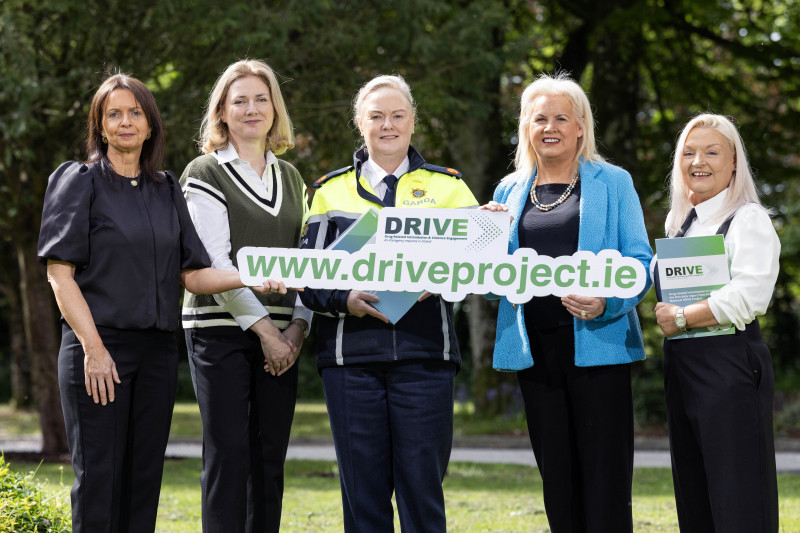
From L-R: Antoinette Kinsella, Chairperson, National DRIVE Oversight Committee; Dr Suzi Lyons, Head of Unit, HRB; Angela Willis, Assistant Commissioner, Organised and Serious Crime, An Garda Síochána; Jennifer Murnane O'Connor, Minister of State at the Department of Health with special responsibility for Public Health, Wellbeing and the National Drugs Strategy; and Siobhán Maher, National DRIVE Project Coordinator. Photo by: Julien Behal Photography.
National DRIVE Project
The DRIVE Project is an interagency initiative funded by the Department of Health to respond to DRI and associated violence in Ireland. It was a key action under the National Drug Strategy (2017–2025), which recognised the impact that drug-related criminality and antisocial behaviour has on communities, and committed to tackling DRI.2 The DRIVE Project will continue and expand its response to DRI, and is included as an action under Pillar 2 in the draft National Drugs Strategy (2026–2029).3
DRI is a pervasive and under-reported form of criminal activity that affects individuals, families and communities in Ireland. Research studies show that awareness of DRI is high, yet reporting remains low due to fear of reprisals, proximity to intimidators, stigma, and limited awareness of supports. A robust understanding of the nature and prevalence of DRI is essential for designing effective interventions and policies. The DRIVE Project aims to develop this understanding through a data-driven model that integrates routine monitoring of DRI within existing national systems. The DRIVE model was published in 2021 and provides a coordinated framework and data-driven model for prevention, support for those impacted by DRI, community response, and system-level change. The DRIVE Project offers a national approach that seeks to reduce incidents of DRI, reduce the harm caused, and create safer and healthier communities.
National DRIVE Project first data report
Methodology
The first national overview of DRI among people engaged with drug and alcohol services and supports to include family support services was produced by the HRB on behalf of the National DRIVE Oversight Committee. It is based on data collected through the HRB’s National Drug Treatment Reporting System (NDTRS) during the 2025 reporting period.4 The NDTRS is the national epidemiological database that records and reports on addiction treatment in Ireland. It is managed by the National Health Information Systems (NHIS) Unit in the HRB and is funded by the Department of Health. The NDTRS dataset captures demographic characteristics, referral/assessment details, treatment status, drug use, risk behaviour, activity details, and exit outcomes. This report presents data for cases who accessed drug and alcohol services and supports, and who disclosed DRI for the 2025 data collection period.
Key findings
Findings from the first national publication on DRI show 1,027 cases of DRI among people engaged with addiction and/or family support services in Ireland during the data collection period. DRI was reported across all Health Service Executive (HSE) Health Regions and in every county. Dublin accounted for the largest share of cases (42.8%). One-half of cases were aged 35 years or under (most cases were aged 20–44 years). The majority of cases were male (58.5%). Approximately three-quarters of cases (74.6%) were in stable accommodation; 12.3% were homeless. Most cases sought treatment for problem drug use (71.0%), most commonly cocaine (39.8%) and cannabis (11.1%). A further 19.2% of cases were affected family members (AFMs) impacted by a loved one’s addiction.
Over one‑third of all cases (36.5%) were currently experiencing DRI at the time of treatment; 63.5% of all cases had previously experienced DRI but not currently. Nearly two-fifths of cases (38.5%) reported that this was their first experience of DRI. Cocaine was the most common problem drug linked to DRI (58.8%), and one‑third (32.5%) reported the involvement of more than one drug.
Drug-related debt was common (67.1%) among cases reporting DRI. Drug-related debt varied from less than €100 to more than €20,000; the most frequent amount demanded was between €1,000 and €4,999 (23.8%). Where known, most intimidators were male. Types of intimidation most commonly reported were threats to the individual (64.2%), and threats to family members (25.1%). Other forms of DRI included violence to the individual (19.7%) and property damage (10.1%). In almost one-half of cases (46.4%), outcomes of the DRI were resolved informally (without the formal intervention of An Garda Síochána), while 20.2% of cases reported that intimidation was ongoing during treatment.
Key messages
- DRI is a widespread and persistent issue in Ireland
- DRI is reported across all HSE Health Regions and in every county
- DRI affects men and women, and all age groups, including those aged under 18 years
- It affects people who use drugs and also their family members
- Cocaine is the main drug linked to DRI
- Most have a drug debt
- A wide range of types of intimidation experienced
The key findings increase understanding of DRI prevalence and trends in local communities and inform responses to reduce the impact on families and communities. They provide strong evidence of the extent of harms from DRI, risk factors of social disadvantage, and impact on family members and communities. They also show the value of the DRIVE model and feasibility of NDTRS data collection as a national monitoring and intervention framework. The continued development of service capacity, improved information sharing, and enhanced integration with community safety and policing initiatives are essential in order to address the complexity of DRI and to protect those affected.
Recommendations
The recommendations are grouped into four main themes, which are derived from previous research evidence and the findings from the NDTRS data. They are:
- Strengthen supports for individuals and families experiencing DRI
- Enhance prevention and community-level interventions
- Strengthen interagency collaboration and policy development
- Use the NDTRS as a model for DRI monitoring
Contact the DRIVE Project for free and confidential support at:
Website: www.driveproject.ie
Email: drive@ndublinrdtf.ie
Telephone: 086 128 1782
- Robinson J, Carew AM, O’Sullivan M and Lyons S (2026) Drug-related intimidation in Ireland: the first data report from the National DRIVE Project. Dublin: National DRIVE Oversight. Available from: https://www.drugsandalcohol.ie/45617/
- Department of Health (2017) Reducing harm, supporting recovery. A health-led response to drug and alcohol use in Ireland 2017-2025. Dublin: Department of Health. Available from: https://www.drugsandalcohol.ie/27603/
- Department of Health (2026) Draft. National Drugs Strategy 2026–2029. An integrated, equitable and evidence-based response to drug and harmful alcohol use. Dublin: Department of Health. Available from: https://www.drugsandalcohol.ie/45067/
- Data collection for this report was undertaken in 2025. Figures are for years 2024 (154) and 2025 (873).
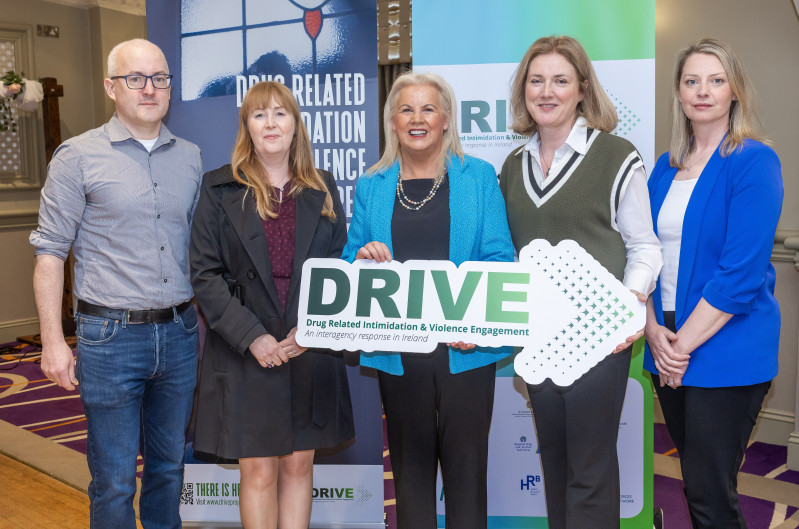
From the launch of the first data report from the National DRIVE Project, L-R: Dr Michael O'Sullivan, Research Officer, National Health Information Systems, HRB; Janet Robinson, DRIVE Data, Research and Evaluation Coordinator; Jennifer Murnane O'Connor, Minister of State at the Department of Health with special responsibility for Public Health, Wellbeing and the National Drugs Strategy; Dr Suzi Lyons, Head of Unit, HRB; Dr Anne Marie Carew, Senior Researcher, National Health Information Systems, HRB. Photo by: Julien Behal Photography.
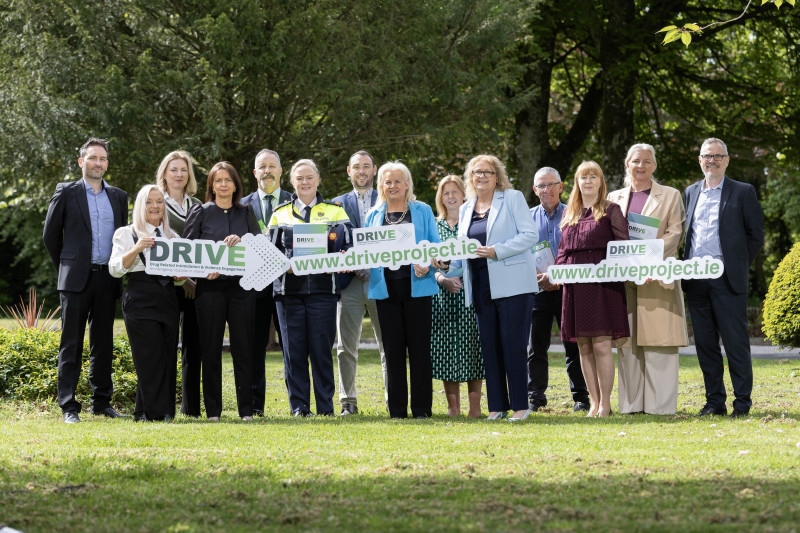
From the launch of the first data report from the National DRIVE Project, L-R: Chris O’Sullivan, North Dublin Regional Drug and Alcohol Task Force Coordinator; Siobhán Maher, National DRIVE Project Coordinator; Dr Suzi Lyons, Head of Unit, HRB; Antoinette Kinsella, Chairperson, National DRIVE Oversight Committee; Detective Superintendent Sé McCormack, An Garda Síochána; Stephen Cashman, National Voluntary Drug and Alcohol Sector; Jennifer Murnane O’Connor, Minister of State at the Department of Health with special responsibility for Public Health, Wellbeing and the National Drugs Strategy; Deirdre Matthews, Probation Service; Fran Byrne, HSE National Addiction Advisory Group; Hugh Greaves, Local Drug and Alcohol Task Force Coordinators Network; Janet Robinson, DRIVE Data, Research and Evaluation Officer; Eibhlin Smith, Tusla – Child and Family Agency; Kevin Byrne, DRIVE Project Officer. Photo by: Julien Behal Photography.
L Social psychology and related concepts > Interpersonal interaction and group dynamics > Social support
L Social psychology and related concepts > Family > Family and kinship > Family support
MM-MO Crime and law > Crime > Substance related crime
MM-MO Crime and law > Crime and violence > Crime against persons (assault / abuse)
MM-MO Crime and law > Crime and violence > Crime against persons (assault / abuse) > Intimidation
MM-MO Crime and law > Crime deterrence
VA Geographic area > Europe > Ireland
Repository Staff Only: item control page