
Doyle, Anne  ORCID: https://orcid.org/0000-0002-2776-3476
(2026)
Healthy Ireland Survey – Alcohol findings.
Drugnet Ireland,
Issue 93, February 2026,
pp. 8-11.
ORCID: https://orcid.org/0000-0002-2776-3476
(2026)
Healthy Ireland Survey – Alcohol findings.
Drugnet Ireland,
Issue 93, February 2026,
pp. 8-11.
| Preview | Title | Contact |
|---|---|---|
|
PDF (Drugnet Ireland 93)
993kB |
Background
The tenth wave of the Healthy Ireland Survey, carried out by Ipsos and commissioned by the Department of Health, involves a representative sample from the general population aged 15 years and over to increase knowledge of the population’s health and health behaviours [1]. Telephone interviews took place with 7,556 respondents between October 2024 and April 2025. Along with questions about alcohol use, the survey examined general health, tobacco use, e-cigarette and nicotine pouches, sleep, menopause, contraceptive use, use of health services, and caring responsibilities. Questions about alcohol use are routinely asked in each wave of the Survey but in the 2025 Survey, additional questions were included to understand the public’s consumption of Zero percent (0.0%) alcohol products.
Main findings on alcohol
Alcohol use
In the past 12 months, 71% of the population aged 15 years and over reported consuming alcohol, 73% of males and 70% of females, static for men since the 2024 survey but an increase from 67% for women [2]. Men aged 15 – 24 years were the largest group reporting last year alcohol use (77%), followed by those aged 45 – 54 years (75%). For women, those aged 15 – 24 years (79%) and 55 – 64 years (80%) were more likely to report consuming alcohol in the previous 12 months (Figure 1).
Drinking at least once a week was reported by 35% of respondents, a decrease since the 2024 Healthy Ireland Survey (38%). In 2025, drinking at least once a week was more common among those aged 55–64 years (31%), particularly males in this age group (34%, compared to 27% of females in the same age group).
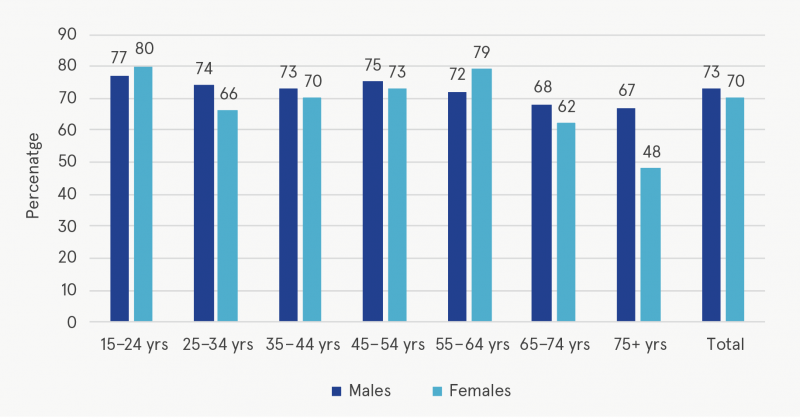
Figure 1: Percentage of respondents who consumed alcohol in the previous 12 months, by sex and age group
Binge drinking
Over one-quarter (26%) of the population reported binge drinking on a typical drinking occasion – defined as drinking six standard drinks or more in one sitting – lower than that reported in 2024 (28%). Males (40%) were typically twice as females to report binge drinking compared with females across all age groups (Figure 2).
Zero percent (0.0%) alcohol product consumption
One-quarter of the Irish population (25%) reported drinking non-alcoholic wine, beer, or spirits, products. More likely to report drinking such products were those aged 25 – 34 (31%) and 35 – 44 years (32%).
Drinkers (those who consumed alcohol in the past year) (30%) were more likely to also drink non-alcoholic products than non-drinkers (12%). Frequent drinkers (those who reported drinking at least once per week) (32%) were more likely than those who reported drinking monthly or less (27%) to drink non-alcoholic products.
Figure 3 illustrates the reasons provided for choosing non-alcoholic drinks, with needing to drive home (56%), and reducing alcohol intake for health (29%), among the main reasons provided. Men were more likely to cite driving (62%) as the reason they drink non-alcoholic products, while women reported health reasons (34%).
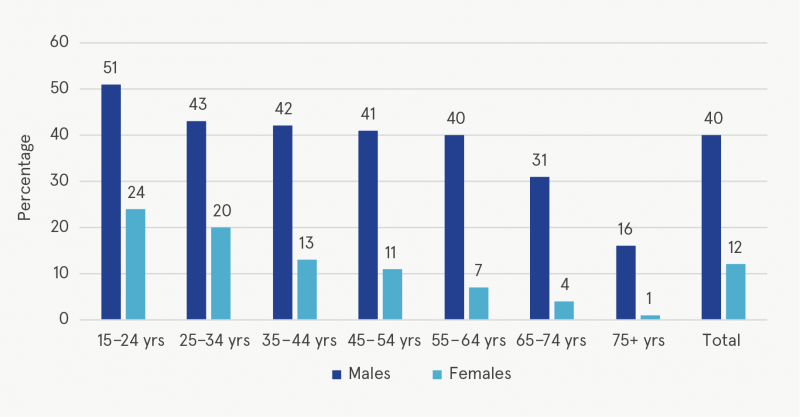
Figure 2: Percentage of respondents who reported binge drinking on a typical drinking occasion, by sex and age group
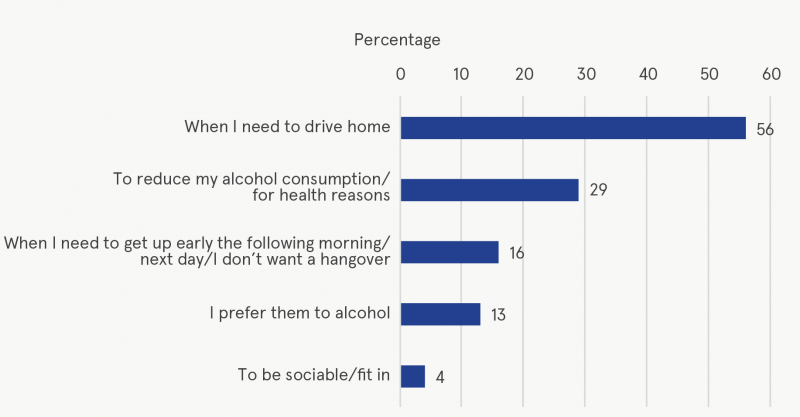
Figure 3 Reasons given for consuming 0.0% alcohol products (%*)
*Note that respondents could choose more than one reason
Harms from alcohol
Alcohol Use Disorders Identification Test (AUDIT)
The 2025 Healthy Ireland Survey included the Alcohol Use Disorders Identification Test (AUDIT), a method to screen for unhealthy alcohol use [3]. Based on AUDIT responses, 1 in 5 of the population (20%) have scores that indicate hazardous or harmful drinking behaviours (score >=8), with 1% scoring 20 or more, indicating possible alcohol dependence. Hazardous or harmful drinking patterns were more common among men (29%) (compared to women, 11%); those aged 15 – 24 years, particularly men in this age group (39%), but women aged 15 – 24 years also score highly (25%); those with lower educational achievements (25%); and students (46%).
Alcohol Use Disorders Identification Test - Concise (AUDIT-C)
The shortened version of the AUDIT, the AUDIT-C was also utilised in the 2025 Healthy Ireland Survey allowing for comparisons with previous surveys. Overall, AUDIT-C scores representing hazardous or harmful drinking have decreased in the last 10 years, from 41% of respondents in 2015 to 36% in 2025. However, for women aged 15 – 24 years, an increase from 31% to 39% was noted. In fact, an increase in hazardous or harmful drinking scores were evident among women of all age groups (except those aged 25 – 34 years and 35 – 44 years, commonly regarded as the principal childbearing years).
Conclusion
Alcohol use remains high among the population, however, has decreased since 2024, representing a continuing decline since the introduction of the Public Health (Alcohol) Act in 2018 [4]. Although binge drinking among women is not as prevalent as among men, AUDIT scores representing drinking behaviours indicate that hazardous and harmful drinking is increasing among women.
This is the first time the Healthy Ireland Survey has asked about the use of non-alcoholic products. This is important information to understand the consumers of these products and may help provide an understanding of their potential role in changing alcohol use behaviours, their potential public health impact, and gain insights into attitudes toward alcohol which may help inform public health interventions.
1 Ipsos B&A. Healthy Ireland survey 2025 - summary report. Dublin: Department of Health 2025. https://www.drugsandalcohol.ie/44539/
2 Ipsos B&A. Healthy Ireland survey 2024 - summary report. Dublin: Healthy Ireland, Department of Health 2024. https://www.drugsandalcohol.ie/42364/
3 Babor T, Higgins-Biddle JC, Saunders JB, et al. AUDIT - The alcohol use disorders identification test: guidelines for use in primary care. Geneva: World Health Organizaton Department of Mental Health and Substance Abuse 2001. https://www.drugsandalcohol.ie/14104/
4 Office of the Attorney General. Public Health (Alcohol) Act. Dublin: Irish Statute Book 2018. https://www.drugsandalcohol.ie/33698/
A Substance use and dependence > Prevalence > Substance use behaviour > Alcohol consumption
B Substances > Alcohol
B Substances > Alcohol > Alcohol-related product (No/lo / NoLo / zero / low drinks)
F Concepts in psychology > Attitude > Attitude toward substance use
G Health and disease > Substance use disorder (addiction) > Alcohol use disorder
MA-ML Social science, culture and community > Sociocultural aspects of substance use > Societal attitude toward substance use / public opinion
T Demographic characteristics > Gender / sex differences
VA Geographic area > Europe > Ireland
Repository Staff Only: item control page