
Doyle, Anne  ORCID: https://orcid.org/0000-0002-2776-3476
(2026)
Alcohol health warning labels in Ireland: early exposure, consumer awareness, and retail uptake following delays in policy implementation.
Drugnet Ireland,
Issue 96, October 2026,
pp. 9-11.
| Preview | Title | Contact |
|---|---|---|
|
PDF (Drugnet 96)
2MB |
Background
Health warning labels on all alcohol products were due to become mandatory in May 2026 as part of a suite of measures included in the Public Health (Alcohol) Act 2018. However, due to the alcohol industry’s concerns about the potential impact of implementation of such labelling given the uncertain global trading environment, their introduction has been postponed until September 2028.
As health warning labelling regulations were signed into law in Ireland in May 2023, some producers had already begun introducing the labelling. Two studies published in 2026 sought to examine the extent of uptake among producers, and consumer awareness and responses to the labels.
What’s on the label? The uptake and distribution of alcohol warning labels in Dublin retail stores following delay in policy implementation
A study examined how widely the health warning labels had been adopted (prior to being mandatory) in retail settings and whether their prevalence changed over time.1 Audits were conducted in five retail stores in Dublin, selected to provide variation in size and geographic location. The stores were visited between August and September 2025 (shortly after postponement announcement), followed by a second round of visits between January and February 2026. The presence of warning labels on beer, wine, and spirit products was recorded, and further information on label placement and additional product characteristics was collected.
The findings showed that uptake of the labels remained relatively limited but increased modestly over time. During the first audit, 6.7% of alcohol products surveyed displayed the new health warning labels, increasing to 8.3% by the second audit (Figure 1). Wine products were most likely to display the labels.
More than 90% of the labels were placed horizontally on the back of the container and it was noted that many products included QR codes linking consumers to further information (84.4%), and 13.3% displayed other voluntary health-related messages.
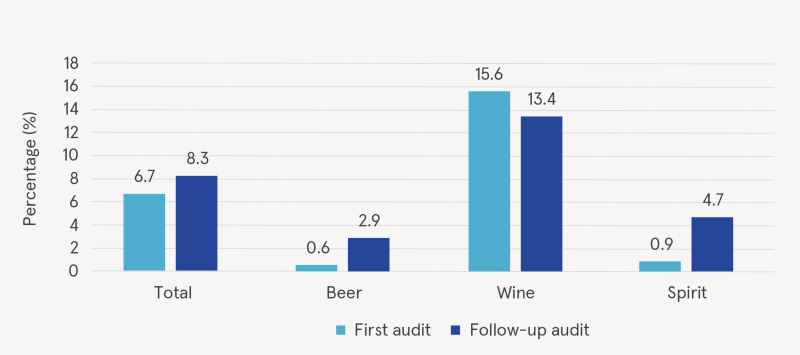
Figure 1: Percentage of sampled products containing new alcohol health warning labels at the two measurement points (August to September 2025 and January to February 2026)
Understanding the early exposure and potential impact of alcohol health warning labels in Ireland: results from a cross-sectional survey
A further study in response to early labelling implementation involved an online cross-sectional survey of 714 adults living in Ireland. This study was conducted to examine awareness and responses to the new labelling.2 Participants were asked about their exposure to the new warning labels, their perceptions of the information provided, their knowledge of alcohol’s links to cancer, and their readiness to change their drinking behaviour.
The results indicated that approximately one-third (32.5%) of respondents had noticed the new labels on alcohol products. Of those who saw the labels, 65.9% reported that the labels informed them about the risks associated with alcohol use, 40.5% said the labels made them think about alcohol’s impact on health, and 24.6% reported that they decided to buy less, or no, alcohol during that shopping trip.
Almost three-quarters of respondents (73.7%) found the warnings informative, and over one-half felt that the information was relevant to them personally (50.6%) (Figure 2).
The study found that those who had noticed the labels were more likely to know that alcohol can cause cancer and were more likely to be considering changes to their drinking behaviour. However, when adjusted for drinking patterns and exposure to alcohol and cancer messages in the media, these associations were no longer statistically significant. Exposure to media messages about the link between alcohol and cancer emerged as the strongest predictor of cancer-related knowledge.
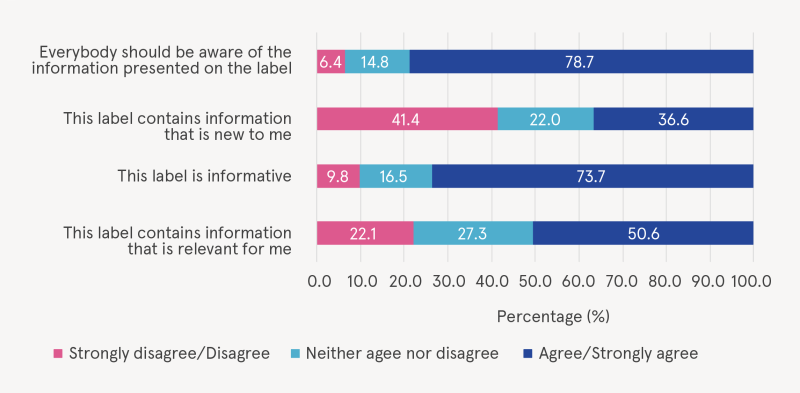
Figure 2: Perceptions of labels among Irish survey respondents
Conclusion
The findings from both studies conclude that although adoption of alcohol warning labels ahead of mandatory implementation was limited, there was evidence of gradual uptake among producers, and consumers have noticed and responded to the labelling. The findings provide early evidence that the labels can increase awareness of alcohol-related health risks and may influence purchasing decisions. The results also highlight the importance of media campaigns in improving knowledge about alcohol and cancer; they also highlight that warning labels and public information campaigns are likely to work most effectively when implemented together as part of a comprehensive alcohol harm reduction strategy. Both studies provide an important baseline against which future changes can be measured.
1 Cordos LE, Mitra S, Savvidou E, et al. (2026) ‘What’s on the label?’ – the uptake and distribution of alcohol warning labels in Dublin retail stores following delay in policy implementation. Prev Med Rep, 70: 103612. Available from: https://www.drugsandalcohol.ie/46724/
2 Kokole D, Correia D, Rehm J, et al. (2026) Understanding the early exposure and potential impact of alcohol health warning labels in Ireland: results from a cross-sectional survey. Int J Drug Policy, 156: 105443. Available from: https://www.drugsandalcohol.ie/46447/
B Substances > Alcohol
J Health care, prevention, harm reduction and treatment > Prevention approach > Prevention through information and education
J Health care, prevention, harm reduction and treatment > Health related issues > Health information and education > Health labels / labelling
MA-ML Social science, culture and community > Sociocultural aspects of substance use > Societal attitude toward substance use / public opinion
MM-MO Crime and law > Substance use laws > Alcohol laws (liquor licensing)
N Communication, information and education > Information use and impact
N Communication, information and education > Information transfer / dissemination > Information transfer from research evidence to practice
VA Geographic area > Europe > Ireland
Repository Staff Only: item control page