
Dillon, Lucy (2026) Review of Prevention Systems (RePS) in Ireland. Drugnet Ireland, Issue 96, October 2026, pp. 1-8.
| Preview | Title | Contact |
|---|---|---|
|
PDF (Drugnet 96)
2MB |
On 16 September, the Minister of State with special responsibility for Public Health, Wellbeing and the National Drugs Strategy, Jennifer Murnane O’Connor, opened the European Society of Prevention Research’s annual conference in Dublin. At that event, she launched a new report on Ireland’s drug prevention system published by the Health Research Board (HRB): Review of Prevention Systems (RePS) in Ireland: Based on the UNODC/WHO International Standards on Drug Use Prevention.1
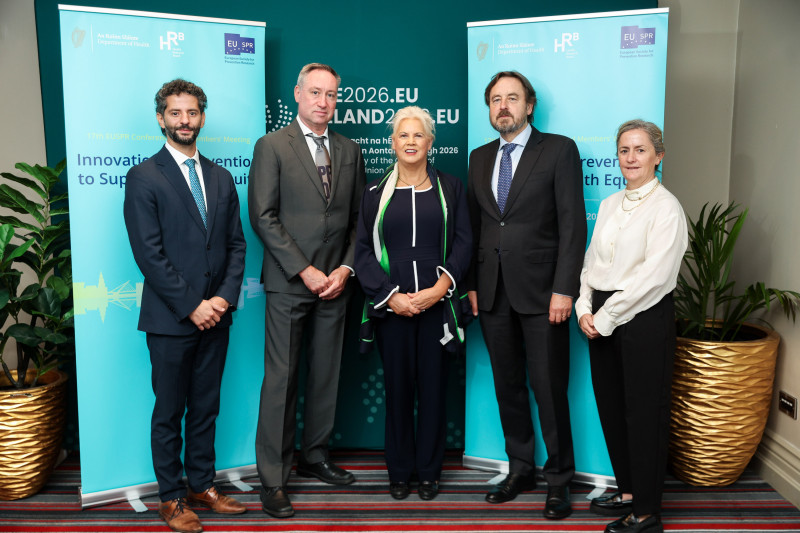
From L-R: Ali Yassine, Associate Programme Manager, United Nations Office on Drugs and Crime (UNODC); Ross MacMillan (author), University of Limerick; Jennifer Murnane O'Connor TD, Minister of State at the Department of Health with special responsibility for Public Health, Wellbeing and the National Drugs Strategy; Brian Galvin (author); Health Research Board; Lucy Dillon (author), Health Research Board.
The RePS was carried out in Ireland with the support of the United Nations Office on Drugs and Crime (UNODC), the Department of Health, the Drug and Alcohol Task Forces (DATFs), the Health Service Executive (HSE), and KORUS Norway. KORUS carried out the pilot of the RePS in Europe.2
Background to the RePS
In 2018, the UNODC in collaboration with the World Health Organization (WHO) published the International Standards on Drug Use Prevention: Second updated edition.3 The Standards present an overview of the international evidence for prevention interventions and policies that promote the health and well-being of children, young people, adults, families, and communities. Based on these standards, the UNODC developed a tool to assess a national prevention system – RePS. It was developed to assess “the extent to which the drug prevention system of a country or sub-national entity (e.g. a municipality) is in line with the Standards with a view to identifying areas of strength and weakness to allow improvement” (p. 1).2
Objectives of the RePS in Ireland
The objectives of the RePS in Ireland were to:
- identify and catalogue the drug and alcohol prevention interventions operating in Ireland
- assess each intervention’s consistency with the UNODC/WHO Standards
- rate the overall efficacy of the system of prevention in Ireland in relation to 22 criteria across 6 domains, as identified by the UNODC
- identify specific strengths, gaps, and opportunities for improvement that will ultimately inform the implementation of the next national drugs strategy.
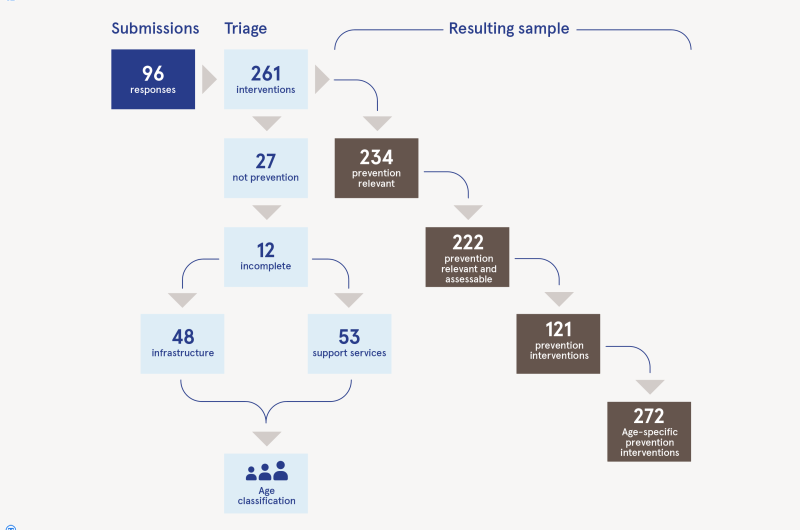
Figure 1. Triage protocol and resulting sample of prevention interventions
Source: MacMillan et al. (2026)
Methodology
To meet these objectives and in line with the RePS methodology, two strands of research were carried out: an intervention survey, and research on Ireland’s prevention system.
Intervention survey
The intervention survey ran from March 2025 to February 2026. Respondents were contacted through Local Drug and Alcohol Task Forces (LDATFs) and Regional Drug and Alcohol Task Forces (RDATFs) and others in receipt of funding for drug and alcohol prevention work from the Department of Health. The criteria for inclusion in the study were based on a consensus of an assessment committee. In total, 121 prevention interventions were identified for assessment, which when reclassified in line with the Standards for the purpose of analysis, resulted in 272 age-specific interventions. Figure 2 illustrates the process through which interventions were selected to undergo assessment.
System research
The collection of evidence to inform the system-level assessment process was guided by a system-focused questionnaire designed by the UNODC as part of the RePS tool. Data were collated from six sources: Ireland’s annual national prevention report to the European Union Drugs Agency;4 evaluation of Ireland’s national drugs strategy;5 Report of the Citizens’ Assembly on Drugs Use;6 a selection of sessions of the Oireachtas Joint Committee on Drugs Use;7 a focus group with 11 members of the Drug and Alcohol Education Workers Forum; and a survey with DATF coordinators (12 of the 24 coordinators responded).
Limitations
The review had limitations, some of which are outlined below:
- The intervention assessments were reliant on the information provided by respondents. In many cases, there was not enough information to make a fully informed judgement. The researchers were deliberately conservative when information was lacking and classified interventions as ‘weakly evidence informed’ rather than ‘strongly evidence informed’, or as ‘not evidence based’ rather than as ‘weakly evidence informed’.
- The researchers did not have a comprehensive list of prevention interventions in Ireland, and hence no sampling frame to draw upon or against which to assess the submissions. Despite efforts to identify as many interventions as possible, some prevention interventions in Ireland will not have been accounted for in the research.
- The organisation of interventions and their assessment in relation to research do not always reflect clear definitions or categories that can easily be matched. Age groups and definitions of risk provided challenges.
- The RePS in Ireland has based its assessment on the system as it stood in Q4 2025. 2025 was a year of transition for Ireland’s national drugs strategy. It is recognised that relevant elements of the delivery structures for the national drugs strategy have not been active since 2024 and new structures had yet to be established at the time of writing (Q3 2026).
- The focus of the system assessment process is on drug prevention rather than prevention more broadly. It looks at drug prevention in the context of the national drugs strategy and its delivery structures. Gaps will exist in the findings of the RePS when compared with the broader prevention sector in Ireland.
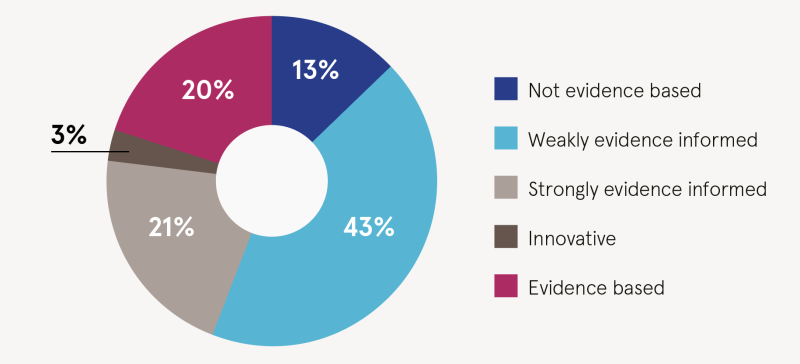
Figure 2: Percentage of age-specific interventions, by quality (n=272)
Source: MacMillan et al. (2026)
Findings of the RePS
The RePS report found that while Ireland’s drug and alcohol prevention system has many strengths, the country does not yet have a coherent and fully effective prevention system. Strengths include strong public health legislation around alcohol and drugs, a network of dedicated local practitioners and community-based organisations, and a significant proportion (41%) of quality prevention interventions that are evidence based or strongly evidence informed. However, the delivery of prevention interventions is fragmented and variable; 43% of interventions are weakly evidence informed, and local evaluation is practically absent, for example. Prevention interventions are largely organised and delivered by local organisations, resulting in uneven access and inconsistent quality across regions. The RePS report’s conclusions are presented at the intervention level and system level separately. The overall breakdown of the quality assessment of age-specific interventions in Ireland can be seen in Figure 2.
Intervention level conclusions and recommendations
Local delivery
In Ireland, prevention interventions are very much a local enterprise with local agencies. The profile found through the RePS was that often DATFs either develop or deliver interventions themselves, or work with other local community groups to do so. This has made the overall landscape of prevention quite idiosyncratic. In some areas and for some target groups, prevention is very prevalent and multifaceted, but this is not the case in other areas.
Research and evaluation
The prevention evaluation landscape in Ireland is sparse. Only 15% of interventions provided any evidence of empirical support for their work. The majority of interventions were assessed to be either weakly evidence informed (43%) or not evidence based (13%). Very few prevention interventions in Ireland are based on practices that have been subject to outcome evaluations, and almost none have been evaluated locally. The authors raise the issue of funding. While the Department of Health has provided one-off funding for the evaluation of five prevention interventions, the authors conclude that there is no ongoing clear mechanism or block of funding to support evaluations of prevention interventions in Ireland on the scale that is needed. There is also a lack of expertise in Ireland in programme evaluation. The authors describe it as critical that Government Departments invest in developing evaluation expertise in prevention.
Geographic and demographic variation
Gaps exist in the geographic and demographic provision of prevention in Ireland. The majority of interventions were located in Dublin and the surrounding areas. While this may be expected given the population density and associated history of drug use, the authors described it as surprising how few interventions were reported in Ireland’s other main cities. Even if this is in part attributable to the methodological approach of the RePS, it suggests that services in other urban areas may be disconnected socially and organisationally from other agencies working on drug use in their areas. There is also variation in the target age groups for prevention interventions. Middle and later adulthood, and early and middle childhood were identified as having only a limited number of interventions. The authors identify a critical need for prevention interventions in Ireland over the coming decades to include younger age groups in particular.
Clarifying the language of risk
The RePS found wide discrepancies among those delivering prevention in Ireland in their understanding of what constituted universal, selective, or indicated risk and how it related to their interventions. The authors argue that the review’s understanding of the coherence of different prevention interventions was somewhat undermined by this lack of clarity.
According to the Standards, interventions need to be tailored to a risk group and any assessment of efficacy is predicated on a coherence and connection between the intervention and risk group. Selecting the most effective intervention requires an accurate understanding of the level of risk. The significance of this for the evaluation of the overall system was also considered critical. Choosing appropriate outcomes to evaluate also requires an accurate understanding of the level of risk. Inconsistency in risk definitions also undermines effective prevention policy. To make funding decisions and to select a balanced portfolio of interventions to meet identified need, policy-makers need to work to definitions of risk that are consistent and aligned to those understood by practitioners. If practitioners define their work differently from policy-makers, the task of developing a coordinated and effective prevention system is compromised.
Delivery settings
Possible gaps were identified in the delivery of prevention interventions in family, workplace, and criminal justice settings. In the case of the criminal justice setting, the authors recognise that this is more likely a reflection of the methodological approach of the RePS tool rather than an absence of activity. However, they also conclude that it suggests criminal justice activities may not be integrated into the overall architecture of prevention planning in Ireland.
Improving the quality of interventions
The authors identified ways in which interventions could be improved. The main limitations that resulted in lower assessments of existing interventions were the extent of contact and the mode of delivery. More interventions need to involve multiple distinct contacts, which are fundamental to effective interventions. Another area for improvement related to the style of delivery. Interventions that are dynamic rather than lecture style and do more than simply provide information about substance use are more effective. They are most effective when the focus is on developing a strong base of personal and social skills (including coping mechanism, decision-making, and resistance skills), and on providing opportunities to test such skills in relation to substance use. Most interventions reviewed fell short on at least two of these dimensions.
System-level conclusions and recommendations
Supportive policy and regulatory frameworks
Ireland’s prevention system was assessed as strong in relation to its policies and legislation that create a controlled environment for the sale, marketing, and price of tobacco products and alcohol. The prioritisation of public health in developing and implementing this approach is to be welcomed when considering effective prevention. However, industry interests maintain a strong influence in the Irish context and have been seen to reduce the potentially positive impact of health-led legislation (for example, in the postponement of applying health labels to alcohol products to 2028). It is also critical that Government policy continues to state firmly that the alcohol industry has no role to play in prevention within schools.
Evidence-based planning and use of research
As mentioned above, while Ireland does not have a culture of evaluating prevention activities, the system review assessed it as having a strong foundation of epidemiological research on drug use. However, using these data to inform prevention policy and practice was not a strong feature of Ireland’s system. There needs to be a clearer understanding of the barriers to and facilitators of utilising epidemiological data, evaluations, and other research findings effectively in the planning and implementation of prevention policy and practice. Policy-makers and service providers need to be supported to work in a more evidence-based way.
Coordination among different sectors and levels
Ireland’s national, regional, and local structures for prevention need to be strengthened to ensure the coherence and meaningful involvement of all stakeholders across the national, regional, and local levels. The findings from the RePS intervention survey would suggest that there is a lot of good practice happening at a local level, which may not be being accessed or disseminated to other local areas, regions, or nationally. A barrier to doing so would be a lack of coordinated and effective structures in some areas.
Training system
Ireland’s prevention system needs to better support training for those who are delivering prevention interventions, as well as their managers and those responsible for decision-making at local, regional, and national levels. The findings suggest that there is extensive knowledge of the field among prevention workers, but that they would benefit greatly from support to develop forums or communities of practice in which to share their knowledge, as well as the development of formal training opportunities relevant to the field. While the European Prevention Curriculum (EUPC) is a valuable part of the landscape, in the absence of other courses it may be expected to meet the training needs of those beyond its target audience.
Sustainability
The UNODC considers national strategies and associated funding as part of its assessment of sustainability within a country’s overall prevention system. Since 2001, Ireland has had a series of national drugs strategies that have included prevention in some form. The most recent national drugs strategy (2017–2025) had prevention as one of its goals. While a new national drugs strategy is at a draft stage at the time of writing (Q3 2026), the structures of the previous strategy were stepped down in 2025. The Strategic Implementation Group (SIG) on prevention last met in 2024. It could be the case that this has impacted negatively on the delivery and progress of prevention in Ireland.
Concluding comment
In Ireland, there are illustrations of good practice across the elements identified by the UNODC as foundations for an effective prevention system. However, these are often isolated and confined to a few areas or localities. The overall assessment indicates that the current structures associated with prevention in Ireland do not constitute an effective national prevention system. The findings suggest that there are many opportunities for improvement and examples of good practice that could be built upon.
1 MacMillan R, Dillon L and Galvin B (2026) Review of Prevention Systems (RePS) in Ireland: Based on the UNODC/WHO International Standards on Drug Use Prevention. Dublin: Health Research Board. Available from:
https://www.drugsandalcohol.ie/46461/
2 United Nations Office on Drugs and Crime, KORUS Oslo (2023) Review of National Prevention Systems based on the UNODC/WHO International Standards on Drug Use Prevention. Final report of the pilot in Norway. Vienna: United Nations Office on Drugs and Crime. Available from: https://www.drugsandalcohol.ie/41014/
3 United Nations Office on Drugs and Crime (UNODC) and World Health Organization (WHO) (2018) International Standards on Drug Use Prevention. Second updated edition. Vienna: UNODC. Available from: https://www.drugsandalcohol.ie/30048/
4 Health Research Board. Irish National Focal Point to the European Union Drugs Agency (2026) Focal Point Ireland: national report for 2025 – prevention. Dublin: Health Research Board. Available from: https://www.drugsandalcohol.ie/php/annual_report.php
5 Grant Thornton (2025) Evaluation of the National Drug Strategy “Reducing Harm, Supporting Recovery 2017-2025”. Dublin: Department of Health. Available from: https://www.drugsandalcohol.ie/43790/
6 Citizens’ Assembly (2024) Report of the Citizens’ Assembly on Drugs Use. Dublin: Citizens’ Assembly. Available from: https://www.drugsandalcohol.ie/40393/
7 A selection of sessions of the Oireachtas Joint Committee on Drugs Use. Available from:
https://www.oireachtas.ie/en/committees/34/drugs-use/videos/
J Health care, prevention, harm reduction and treatment > Prevention outcome
J Health care, prevention, harm reduction and treatment > Substance use prevention
J Health care, prevention, harm reduction and treatment > Prevention programme or service
J Health care, prevention, harm reduction and treatment > Prevention approach
MP-MR Policy, planning, economics, work and social services > Policy > Policy on substance use > Demand reduction / prevention policy
T Demographic characteristics > Prevention / youth worker
VA Geographic area > Europe > Ireland
Repository Staff Only: item control page